

A globally diversified, multi-asset fund, with the team seeking to incorporate complementary sources of return with portfolio insurance strategies. The fund's performance aspiration is 5% p.a. above cash (before fees) over a rolling 3-year period. Within its sector, the fund features in our 'Multi-Asset, Diversified' category.
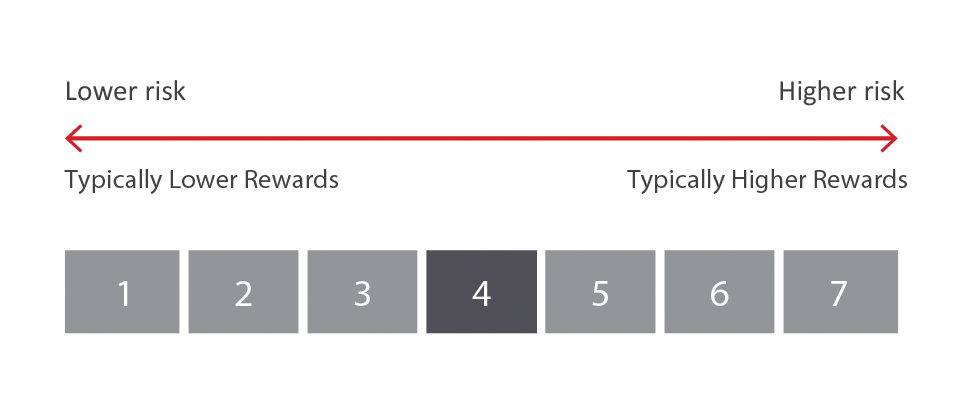
The fund's KIID Synthetic Risk and Reward Indicator (SRRI) is 4. This is a regulatory measurement that is, where possible, calculated from the volatility of its weekly performance over a five-year period. A score of 4 means the fund's historic volatility is between 5% and 10%.
The fund’s five-year standard deviation is slightly higher than similar multi-asset funds in the sector. Although the fund aims to achieve positive returns, investors should be aware that this is a longer-term objective and performance over the shorter term maybe indifferent or negative. Different share classes could have differing SRRI scores.
The fund is managed by the Asset Allocation team. Chris Jeffery (Co-Head of Asset Allocation, Head of Macro Strategies), Willem Klijnstra (Strategist) and Josh Logan (fund manager) are the lead portfolio managers. They work closely with John Roe (Co-Head of Asset Allocation, Head of Multi Asset). The Asset Allocation team combines Legal & General Investment Management’s (LGIM) economic and multi-asset research capabilities with portfolio management across a range of multi-asset products.
The team seeks to grow and protect investors' capital, as well as manage volatility and moderate drawdowns through a diversified, multi-strategy approach. Three key investment principles underpin their approach: markets are inefficient; everything else being equal, greater investment flexibility expands the opportunity set; the path of returns matters, not just the long-term outcome.
Over the long term, portfolio risk is expected to be drawn fairly evenly from the market, alternative and tactical strategies, although the team tends to lean more heavily into the tactical element as a source of risk and return. More generally, the aim is for the portfolio to have average sensitivity to broader equity markets (beta) of below 0.4 and annualised volatility in the 6% to 10% range (annualised). The drawdown of the fund is not expected to exceed 40% of the drawdown of equities (as represented by the S&P 500 index). The portfolio typically comprises 35-50 diversified strategies.
The team believes that a flexible, multi-strategy approach, which is free of the constraints of a benchmark or implementation style, is the most effective way of delivering a return that is less reliant on market direction. Strategies are identified from across asset classes, sectors, currencies, interest rates, inflation and volatility instruments and they are blended such that the overall portfolio is exposed to complementary sources of returns.
The asset allocation team seeks to understand the current and likely future phases of the economic cycle, as well as analysing market valuations and systemic risks. This facilitates the continuous appraisal of the appropriate level of market risk to take. Investment ideas are generated via a team-based, research-driven process, through which strategies are honed using the input of economists, strategists and fund managers. The fund is framed around four key components: market returns (long-only investments that can encompass all available asset classes); alternative strategies (dynamic, rule-based strategies that capture alternative risk premia); tactical strategies (a blend of relative value and outright strategies that reflect the team's short-term views); and, risk mitigation strategies (managing correlations, limiting drawdowns and balancing factor risks according to the shape of the overall portfolio).
Formal documentation, including the fund prospectus and the KIID, should be sought directly from the asset manager. For ease of reference, a link to the ASSET MANAGER WEBSITE can be found above.
Investment Association sector definition: Funds managed with the aim of delivering positive returns in any market conditions, but returns are not guaranteed.
Funds in this sector may aim to achieve a return that is more demanding than a “greater than zero after fees objective.”
Funds in this sector must clearly state the timeframe over which they aim to meet their stated objective to allow the Investment Association and investors to make a distinction between funds on this basis. The timeframe must not be longer than three years.
Your use of this website is subject to the terms of use set out in the website. By continuing to use our website we will assume that you are happy to receive non-privacy intrusive cookies. Please be aware that if you disable cookies some functionality on the site will not work. Read our cookies policy to find out more about our cookie use and how to disable cookies.
Alternatively, if you are not a financial professional and are seeking financial advice, you may wish to visit unbiased.co.uk to search for a financial adviser.