

The fund invests primarily in pan-European high yield bonds using a bottom-up driven investment approach. The team seeks to exploit inefficiencies in the pricing of credit in relation to company fundamentals, taking a long-term approach to this analysis. Within its sector, the fund features in our 'Primarily Pan-European High Yield, Flexible' category.
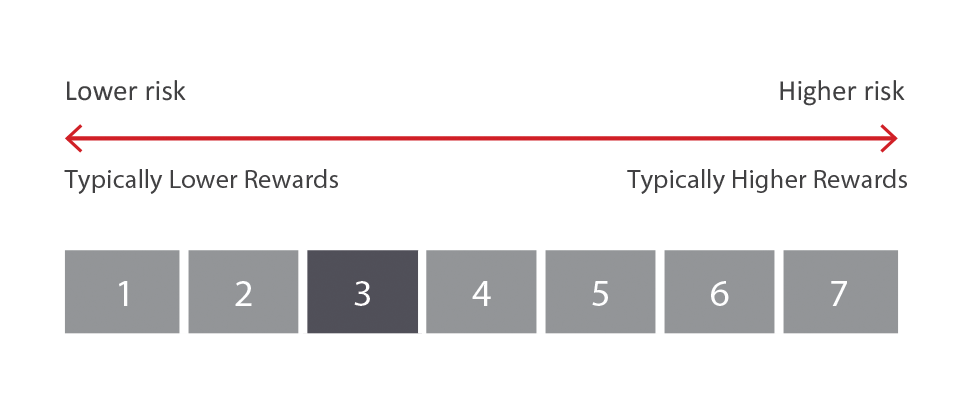
The fund’s KIID Synthetic Risk and Reward Indicator (SRRI) is 3. This is a regulatory measurement that is, where possible, calculated from the volatility of its weekly performance over a five-year period. A score of 3 means the fund’s historic volatility is between 2% and 5%.
SRRI scores of 3 and 4 are common in the sector. The fund’s five-year standard deviation is similar to mainstream high yield bond benchmarks. Given the concentrated portfolio and the team’s focus on issuers and stock specifics, we would expect the fund to have periods of higher-than-average volatility. That said, the team will adjust overall risk and themes within the portfolio through a careful assessment of macro and geopolitical drivers. Different share classes could have differing SRRI scores.
Steve Logan is the lead manager, and Paul Metha is the co-manager. They are members of Aberdeen’s European High Yield team. Mr Logan is Head of the European High Yield and Global Loans team. He has over 30 years’ credit investment and leadership experience, including at Aberdeen and its predecessor companies between 2001 and 2020. The team is part of the firm’s large global fixed income capability, incorporating a wide range of specialisms and based in offices across the UK, the US and Asia.
The team believes that company fundamentals ultimately drive the credit premium attached to high yield bonds. At the same time, they believe that the market is not efficient at pricing these fundamentals, particularly when they are undergoing material change. Their aim is to exploit this inefficiency, recognising that the market’s focus upon fundamentals ebbs and flows during various stages of the investment cycle.
At least 80% of the fund is invested in high yield bonds issued across the UK and Europe and the minimum average credit rating of the portfolio is B-. Overseas currency exposure is hedged to sterling. The portfolio typically features 120-180 securities. Up to 10% can be in unrated bonds. The maximum permitted allocation to cash is 10%. Derivatives are used primarily for the purposes of efficient portfolio management.
The investment process is based around detailed bottom-up analysis and ongoing monitoring of the creditworthiness of each issuer. The team’s fundamental views are formulated around three broad areas – idiosyncratic risk, cyclical/sector themes, and systemic risk. In the case of idiosyncratic risk, the team assesses a company’s balance sheet and profitability and judges the impact of any change that might alter its creditworthiness. In terms of cyclical/sector themes, they analyse how well positioned or exposed a company is to industry dynamics when compared to peers. Finally, an assessment of systemic risk highlights where a company would be affected by broader-based themes, such as regulatory or rating agency changes. In the process of collating its research, the team meets companies, conducts cash-flow and credit analysis, reviews bond covenant protections and collaborates with equity colleagues with regard to company and sector views.
The culmination of this work is a final recommendation for each company, incorporating a fundamental credit assessment, a fundamental credit trend, an ESG risk rating and a relative value judgement. The team regards this as a dynamic process and their work is kept up to date according to changing information. The output from the relative value assessment is an analyst rating of cheap, fair, or expensive. The final step is to bring all elements of the research process together and provide a recommendation, which is broken down across a five-notch system: buy, overweight, neutral, underweight, sell. To help them understand changes to the credit landscape, they monitor credit valuations, the impact of market demand/supply and the impact of government/regulatory influences. Using this information, the portfolio is built from the bottom up, with the team paying close attention to valuation compared to the risk taken.
Formal documentation, including the fund prospectus and the KIID, should be sought directly from the asset manager. For ease of reference, a link to the ASSET MANAGER WEBSITE can be found above.
Investment Association sector definition: Funds which invest at least 80% of their assets in Sterling denominated (or hedged back to Sterling) below BBB minus fixed interest securities.
Read more > Your use of this website is subject to the terms of use set out in the website. By continuing to use our website we will assume that you are happy to receive non-privacy intrusive cookies. Please be aware that if you disable cookies some functionality on the site will not work. Read our cookies policy to find out more about our cookie use and how to disable cookies.
Alternatively, if you are not a financial professional and are seeking financial advice, you may wish to visit unbiased.co.uk to search for a financial adviser.