

A UK equity fund that invests in mid-cap stocks. The approach combines structural growth themes with detailed company analysis. Within its sector, the fund features in our 'Dedicated Mid-Cap' category.
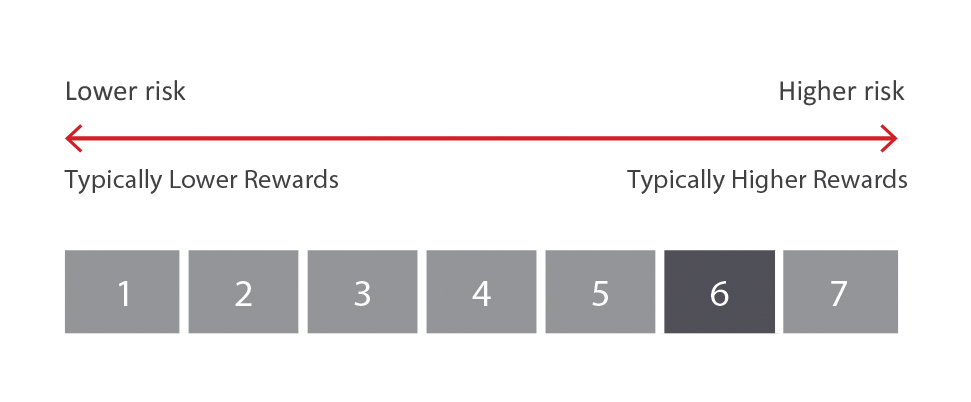
The fund’s KIID Synthetic Risk and Reward Indicator (SRRI) is 6. This is a regulatory measurement that is, where possible, calculated from the volatility of its weekly performance over a five-year period. A score of 6 means the fund’s historic volatility is between 15% and 25%.
The fund’s SRRI score is consistent with the realised volatility of mid-cap indices over the past five years. We would expect it to continue to deliver a modestly higher standard deviation than mainstream UK equity benchmarks due to its dedicated mid-cap style. Different share classes could have differing SRRI scores.
The fund is managed by Dan Harlow, Head of UK Equity Small Cap. He has been involved in the management of the fund for more than ten years, working closely with former lead manager, Chris St John, who left the firm at the end of September 2026. He is also the lead manager of the UK Smaller Companies fund. Mr Harlow joined the firm in 2010 as a member of the AXA Investment Management Equity UK desk. Prior to this, he worked at Montanaro Asset Management as a portfolio manager and Head of UK Fund Management, with responsibility for UK small-cap mandates.The UK investment team incorporates several experienced manager/analysts, who run a variety of UK equity mandates. They work in a highly collegiate manner and also draw upon other managers and industry experts from within AXA Investment Managers’ Framlington Equities UK investment team
The manager believes that attractive long-term returns can be obtained by owning the equity of companies with exceptional long-term growth potential. Within the mid-cap universe, he emphasises detailed company analysis to recognise those with the balance sheet and capital structure to enable management to take advantage of the growth opportunity.
The manager's assessment of risk is primarily undertaken at the company level, in terms of the potential for operational disappointment relative to expectations. In the absence of any such concerns, he is willing to tolerate the short-term volatility of mid-cap stock prices. Nevertheless, the portfolio is typically well diversified to ensure that no single stock disappointment can significantly impair performance. Thus, it typically holds 50-70 stocks with no more than 4% in any position. At least 70% is typically held in FTSE 250 constituents and no more than 15% in larger caps.
Thematic ideas help direct and inform the stock selection process but are themselves also devised or altered according to the manager's company-level insights. The themes are important, but are relatively broad in attempting to capture structural tailwinds that support company growth within the UK mid-cap market. Ultimately, the manager's stock research is the key determinant of positioning. His financial and business analysis is structured to identify companies with the potential and ability to deliver long-term growth in earnings and profits.
He focuses particularly on a company's capital structure, debt level, management track record and barriers to competition. He believes these are the key factors in ensuring that management is capable of allocating capital to maximise the long-term growth of the business. He is mindful of valuation and seeks to not overpay for growth prospects, nonetheless, he is comfortable paying a premium compared to the market average for companies that meet his investment criteria. The search for long-term, structural growth means that, typically, the portfolio is more expensive than the benchmark according to standard valuation metrics, but with above-average earnings growth, less debt and a higher return on equity.
Formal documentation, including the fund prospectus and the KIID, should be sought directly from the asset manager. For ease of reference, a link to the ASSET MANAGER WEBSITE can be found above.
Investment Association sector definition: Funds which invest at least 80% of their assets in UK equities which have a primary objective of achieving capital growth.
Read more > Your use of this website is subject to the terms of use set out in the website. By continuing to use our website we will assume that you are happy to receive non-privacy intrusive cookies. Please be aware that if you disable cookies some functionality on the site will not work. Read our cookies policy to find out more about our cookie use and how to disable cookies.
Alternatively, if you are not a financial professional and are seeking financial advice, you may wish to visit unbiased.co.uk to search for a financial adviser.