

A long-established Japanese equity fund managed by growth-orientated investors. Proprietary research and low turnover are hallmarks of the approach. Within its sector, the fund features in our 'Larger-Cap, Growth' category.
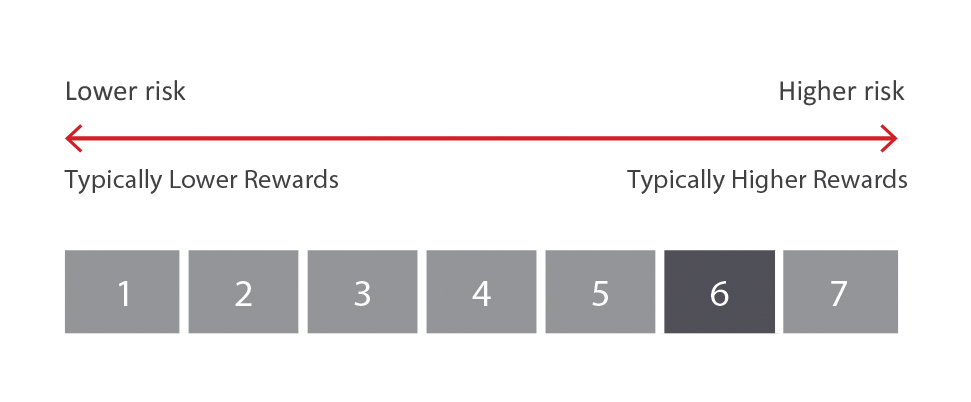
The fund's KIID Synthetic Risk and Reward Indicator (SRRI) is 6. This is a regulatory measurement that is, where possible, calculated from the volatility of its weekly performance over a five-year period. A score of 6 means the fund's historic volatility is between 15% and 25%.
The fund’s risk score is in keeping with other funds in the sector. Its five-year volatility is higher than the sector and is broadly in line with the benchmark. Different share classes could have differing SRRI scores.
The fund is managed by Matthew Brett who is supported by co-manager Jared Anderson. Mr Brett joined the group in 2003 and became a partner of the firm in 2018. Mr Anderson joined the firm in 2016. Prior to the joining the team, he worked in the firm’s Global Alpha, UK Equities and Fixed Income teams. They are supported by an experienced and well-resourced team of investment managers and analysts that includes Head of Japanese Equities, Donald Farquharson.
The team are bottom-up, growth-orientated investors. They believe that fundamental proprietary research and a long-term mindset are the key ingredients for investment success. They seek out companies generating high quality earnings that have strong competitive franchises, the value of which, they argue, is often underestimated by the market.
The fund features 45-65 holdings, with top positions typically included at 3% weightings. Position sizes are a function of conviction and the extent to which their team's view differs from the market consensus. Turnover tends to be low.
Fundamental company research lies at the heart of the process, with sector responsibilities shared across the team and rotated regularly to keep the pool of ideas refreshed. There is a very structured approach to conducting research and it is planned around various themes. They construct a "Followed List” of around 350 companies, which forms the basis of the debate at formal monthly research meetings. Any stock under consideration must pass any or all of the four primary screens, namely a positive industry background, a compelling competitive advantage, shareholder-friendly management or sound financials.
The "Focus List" of between 60 and 80 stocks, which are already held or are under consideration, is reviewed once a month, while a twice-monthly model portfolio discussion reviews potential changes to the portfolio. Companies under consideration typically display strong competitive advantages within growth industries, are generally able to fund growth organically and have management teams that run their businesses in shareholders' interests. Valuation is reviewed in relation to earnings, cashflows and returns rather than on the basis of more mechanistic measures of value. Indeed, they argue that mistakes are more often made by misjudging growth than by misjudging what to pay for it. The sell discipline is enacted when any of the four primary factors are deteriorating. Stocks in the portfolio fall into one of four generic categories - secular growth, growth stalwarts, special situations and cyclical growth, with secular growth typically being the most dominant of these. This structure promotes diversification of holdings.
Formal documentation, including the fund prospectus and the KIID, should be sought directly from the asset manager. For ease of reference, a link to the ASSET MANAGER WEBSITE can be found above.
Investment Association sector definition: Funds which invest at least 80% of their assets in Japanese equities.
Read more > Your use of this website is subject to the terms of use set out in the website. By continuing to use our website we will assume that you are happy to receive non-privacy intrusive cookies. Please be aware that if you disable cookies some functionality on the site will not work. Read our cookies policy to find out more about our cookie use and how to disable cookies.
Alternatively, if you are not a financial professional and are seeking financial advice, you may wish to visit unbiased.co.uk to search for a financial adviser.