

A high conviction, developed markets equity fund that is invested in companies considered to have sustainable long-term earnings power. The managers take a long-term approach and hence, turnover is low. Within its sector, the fund features in our 'Larger-Cap, Growth' category.
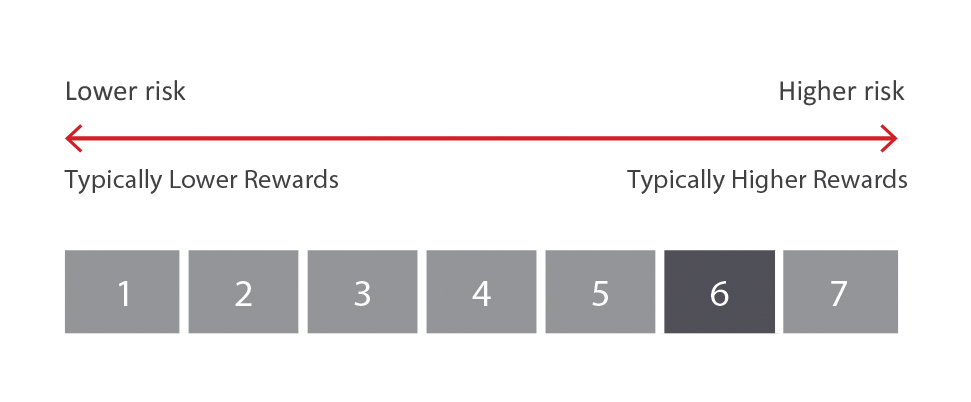
The fund’s KIID Synthetic Risk and Reward Indicator (SRRI) is 6. This is a regulatory measurement that is, where possible, calculated from the volatility of its weekly performance over a five-year period. A score of 6 means the fund’s historic volatility is between 15% and 25%.
The fund’s five-year standard deviation is higher than that of global equity benchmarks. Given the fund’s investment approach and the team’s long-range investment horizons, the relative risk outcome is likely to vary through time according to the underlying market dynamics. Absolute risk is mitigated by the team’s focus on companies with long-term sustainable earnings power, together with an awareness of the different types of economic risk. Different share classes could have different SRRI scores.
The fund is managed by the Strategic Equity Team and consists of five investment professionals, all of whom are based in London. Alister Hibbert and Michael Constantis are the co-managers, working closely with three dedicated research analysts. They have been working together since 2008. Mr Hibbert is Head of the Strategic Equity Team and serves on BlackRock’s Global Operating Committee. Mr Constantis joined BlackRock in 2005 and also manages a pan-European strategy which uses the same investment approach.
The team’s philosophy is built around the belief that the market has become increasingly focused on short-term outcomes. They believe that over long-term horizons, equity returns can be explained largely by the sustainability of a company’s returns and the scale of its reinvestment opportunity. This provides an opportunity for the long-term investor who is willing to ride out short-term noise and back exceptional businesses into the future.
The fund is benchmark agnostic and highly concentrated, featuring 20-30 stocks. It is focused on developed market stocks. The team uses a proprietary, real-world risk approach to ensure the economic risk (earnings and cash flow risk) of the fund does not become too skewed or concentrated. They break down the fund into five types of economic risk: defensive names (cash flows are not expected to fall significantly in a downturn); consumer cyclicals (derive cash flows from discretionary consumer spending); industrial cyclicals (cash flows linked to the industrial cycle and discretionary corporate expenditure); financials (companies whose cash flows are linked to equity market levels, interest rates and credit cycle); and energy (cash flows linked to oil, coal, or natural gas prices. At least 50% of the fund is invested in defensive names.
In an environment of low economic growth and technological disruption, the team believes the market is increasingly divided between ‘winners’ and ‘losers’. Against this backdrop, they believe an index-orientated approach may not represent the optimal opportunity set for long-term investors and the team deliberately avoids any benchmark constraints.
Fundamental research is centred around the sustainability of company’s returns and the scale of its reinvestment opportunity. The team focuses on how a company’s growth might look into the future, not just the next quarter. There are four characteristics that help them identify companies positioned to compound long-term earnings in a sustainable manner: established market position; structural tailwinds; high returns and compounding real terms earnings over time and exceptional management teams. Central to the investment case is the qualitative assessment undertaken by the team. They seek to build a deep fundamental understanding of their investments via three key lenses of analysis: management meetings, which provide strategic and operational insights into businesses; microeconomic cyclicality, which assesses the outlook for key spending streams that back businesses; and, structural change insights, which allow the team to identify seismic shifts and disruptive forces impacting industry returns.
Formal documentation, including the fund prospectus and the KIID, should be sought directly from the asset manager. For ease of reference, a link to the ASSET MANAGER WEBSITE can be found above.
Investment Association sector definition: Funds which invest at least 80% of their assets globally in equities. Funds must be diversified by geographic region.
Read more > Your use of this website is subject to the terms of use set out in the website. By continuing to use our website we will assume that you are happy to receive non-privacy intrusive cookies. Please be aware that if you disable cookies some functionality on the site will not work. Read our cookies policy to find out more about our cookie use and how to disable cookies.
Alternatively, if you are not a financial professional and are seeking financial advice, you may wish to visit unbiased.co.uk to search for a financial adviser.