

A quality-biased, core global emerging market equity fund where stock selection is the main driver of returns. The experienced managers benefit from a rich source of stock ideas, industry knowledge and local insights from the globally located research team. Within its sector, the fund features in our ‘Larger-Cap, Blend’ category.
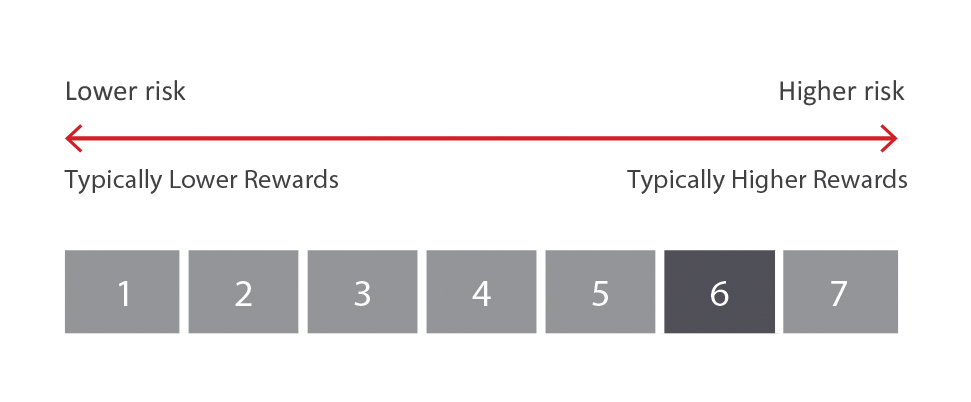
The fund’s KIID Synthetic Risk and Reward Indicator (SRRI) is 6. This is a regulatory measurement that is, where possible, calculated from the volatility of its weekly performance over a five-year period. A score of 6 means the fund’s historic volatility is between 15% and 25%.
The fund’s risk score of 6 is in keeping with that of other funds in the peer group. Other risk measures indicate that the fund’s risk profile is in keeping with that of the index. Given the managers’ desire to offer a blended fund without strong stylistic or macro tilts, we would expect the relative risk outcome to be consistent with this over time. Different share classes could have differing SRRI scores.
The Templeton Global Emerging Markets Equity strategy is offered by Templeton Global Investments (TGI), part of Franklin Templeton. It is co-managed by Chetan Sehgal and Andrew Ness, both very experienced practitioners, with support from Manish Agarwal. The team works closely with the expansive TGI equity research team, which incorporates investment professionals based in locations around the world.
The team seeks to capture the growth potential of emerging market companies through a research-driven, fundamental security selection process. They believe that in the long run, stock prices are driven by the ability of companies to sustain profits and earnings power. However, market noise, short termism or information gaps can cause temporary mis-pricings. Therefore, their focus is upon identifying companies that have sustainable earnings power but are trading at a discount to their intrinsic worth.
The portfolio is diversified, featuring 60-80 holdings selected from across the market-cap spectrum. Stock positions can be between 0.50% up to a maximum 6% active weighting, with the managers taking due account of liquidity. On that note, they are prepared to hold less liquid companies but manage positions appropriately. Active country and sector weightings can be +/- 10% compared to the benchmark. Turnover is low and the portfolio is typically fully invested.
The process is heavily influenced by TGI’s proprietary, bottom-up research. The strategy is focused on identifying companies with sustainable competitive advantages, clear earnings power, internal growth drivers and valuation discounts versus intrinsic value. Idea generation is multi-faceted but relies primarily upon the insights of analysts and portfolio managers working on a wide range of global, regional and single country strategies. TGI believes that local presence and understanding helps them identify trends and opportunities that may be missed by quantitative methods. That said, quantitative resources are available to help analysts locate companies of interest for TGI’s platform. In terms of stock research, analysts collect and analyse various sources of information to formulate a view of the company and build models to evaluate financial strength and profitability, and to project future earnings and cash flows. Industry supply and demand models are incorporated into the analysis, as well as country and currency-related macro considerations. The team engages actively with companies, conducting over 2,000 meetings each year, benefiting from relationships that have often been cultivated over a long period of time.
Candidates for the portfolio should be sustainable (able to maintain/grow economic profits), have earnings power and be of high quality (robust economic earnings and cash flows, internal drivers, good products, services and management teams), and trading on a discount to the team’s view of intrinsic value, which incorporates their qualitative and quantitative assessments. They assess the risk/reward balance of a candidate company by conducting sensitivity analysis, stress-testing and scenario analysis. As part of this process, they seek to understand the margin of safety in terms of the market consensus expectations compared to their own.
The portfolio is constructed with diversification and risk control in mind. As well as stock specific factors, the managers consider the marginal risk and return effect of adding a position to the portfolio. An independent risk team supports sizing decisions in the context of upside potential and stock risk.
Formal documentation, including the fund prospectus and the KIID, should be sought directly from the asset manager. For ease of reference, a link to the ASSET MANAGER WEBSITE can be found above.
Investment Association sector definition: Funds which invest 80% or more of their assets in equities from emerging market countries as defined by the relevant FTSE or MSCI Emerging Markets and Frontier indices. The maximum frontier equity exposure is restricted to 20% of the total fund.
Read more > Your use of this website is subject to the terms of use set out in the website. By continuing to use our website we will assume that you are happy to receive non-privacy intrusive cookies. Please be aware that if you disable cookies some functionality on the site will not work. Read our cookies policy to find out more about our cookie use and how to disable cookies.
Alternatively, if you are not a financial professional and are seeking financial advice, you may wish to visit unbiased.co.uk to search for a financial adviser.