

The fund provides exposure to pan-European high yield bonds. The approach is value-driven, with the managers prepared to express high conviction views where they see the greatest opportunities. Within its sector, the fund features in our ‘Primarily Pan-European High Yield, Flexible’ category.
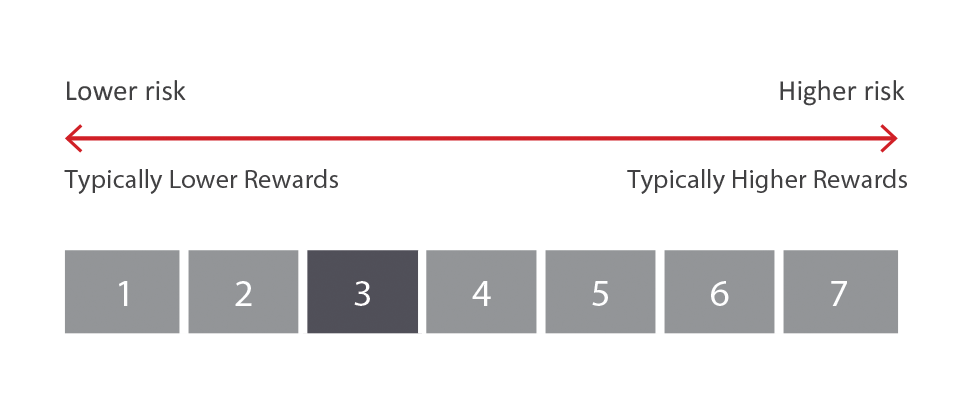
The fund’s KIID Synthetic Risk and Reward Indicator (SRRI) is 3. This is a regulatory measurement that is, where possible, calculated from the volatility of its weekly performance over a five-year period. A score of 3 means the fund’s historic volatility is between 2% and 5%.
SRRI scores of 3 and 4 are common in the sector. The fund’s five-year standard deviation is similar to mainstream high yield bond benchmarks. There is the scope for higher volatility from this fund, as the value-driven approach means the managers are comfortable taking decisive issuer and sector specific views when they believe they are suitably compensated for the investment risk. Different share classes could have differing SRRI scores.
The fund is co-managed by Thomas Moore and Tom Hemmant, who are based in Henley-on-Thames. Mr Moore is Global Head of High Yield and has direct oversight of portfolio management teams in North America and Europe. He started his career in 1999 and joined the Invesco Fixed Income Europe team in 2016. Mr Hemmant joined the Henley-based team in 2011 as a credit analyst and became a fund manager in 2020.
The team believes that fixed income markets continually present opportunities for active managers to outperform indices. They highlight that markets can be distorted by a number of factors, including, yields and spreads being too high or low, different investor objectives and rigid investment constraints. By taking advantage of these opportunities through fundamental analysis and a strong emphasis on valuation, they believe they can deliver competitive risk-adjusted returns under most market conditions.
At least 80% of the fund is invested in high yield bonds, primarily those issued on UK and European markets. Overseas currency exposure is hedged to sterling. The managers pay little attention to the composition of any high yield bond benchmark. The bulk of the fund is invested in core high yield bonds (typically single B-rated quality names) and “cross-over” names (those bonds whose ratings are close to the boundary between investment grade and high yield). A smaller component of the fund, typically less than 10 names, may be invested in highly leveraged companies, sometimes requiring restructuring. Bonds are selected based on their individual merits, with position sizes decided on a case-by-case basis using qualitative judgement and analysis. The maximum permitted allocation to cash is 20%. The managers may use derivatives to enhance the performance of the fund, as well as for efficient portfolio management purposes.
The structure of the portfolio is driven by the team’s macro-economic views and their consequent identification of value across the broad bond sectors. Their analysis of the economic cycle is focused on monetary policy developments and the trend in the pricing of credit risk. These factors inform the general strategy for the portfolio in terms of duration, credit risk and the areas of preference on the yield curve. They can often lead to high-conviction preferences for particular industries and/or segments of the fixed income universe.
This research is complemented by bottom-up company research, undertaken by the team of credit analysts. Analysts review the fundamental credit quality alongside the environmental, social and governance (ESG) quality of an issuer. They then assign an issuer fundamental rating (AAA, AA, A, BBB, BB, CCC, D) and an assessment of the credit trend (improving, stable, deteriorating over the next 12-18 months) for what is typically a senior unsecured security of that issuer. In addition, each issuer receives a proprietary overall ESG grade. The issuer fundamental rating encapsulates the creditworthiness of a particular issuer using financial metrics. For example, for high yield issuers, assessments of asset coverage and debt serviceability are integral to the analysis. Such research supports relative value analysis between issuers and between different bonds issued by the same company.
Formal documentation, including the fund prospectus and the KIID, should be sought directly from the asset manager. For ease of reference, a link to the ASSET MANAGER WEBSITE can be found above.
Investment Association sector definition: Funds which invest at least 80% of their assets in Sterling denominated (or hedged back to Sterling) below BBB minus fixed interest securities.
Read more > Your use of this website is subject to the terms of use set out in the website. By continuing to use our website we will assume that you are happy to receive non-privacy intrusive cookies. Please be aware that if you disable cookies some functionality on the site will not work. Read our cookies policy to find out more about our cookie use and how to disable cookies.
Alternatively, if you are not a financial professional and are seeking financial advice, you may wish to visit unbiased.co.uk to search for a financial adviser.