

An equity fund that incorporates long and short positions in UK and overseas companies, managed with a view to delivering positive performance and limiting drawdowns. The net exposure to equities is adjusted pro-actively according to the perceived opportunity set. The approach is informed by the managers' top-down views and industry factors affecting firms. Within its sector, the fund features in our 'Long/Short Equity, Conditionally Directional' category.
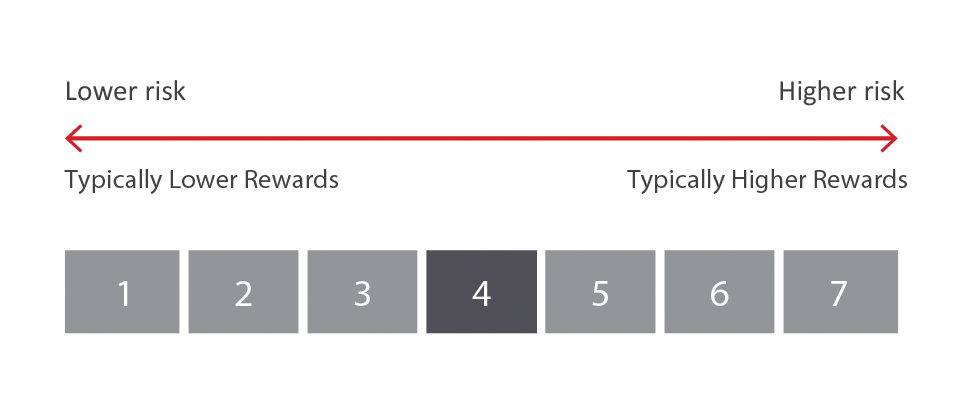
The fund's KIID Synthetic Risk and Reward Indicator (SRRI) is 4. This is a regulatory measurement that is, where possible, calculated from the volatility of its weekly performance over a five-year period. A score of 4 means the fund's historic volatility is between 5% and 10%.
The fund's risk score is towards the lower end of the 5%-10% range. Our analysis indicates that the fund's risk score has oscillated between 4 and 3, which is to be expected given the "conditionally directional" nature of the fund. In other words, the managers are prepared to take variable exposure to market risk according to their views which can result in the fund's risk characteristics rising and falling over shorter-time periods. Different share classes could have differing SRRI scores.
The fund is co-managed by Luke Newman and Ben Wallace, who joined Henderson as part of the group's takeover of Gartmore in 2011. The managers work closely together with analysts, Dan Davies and Gary Thomson, and all are involved in generating ideas for the strategy. They also draw input from the wider Pan-European Equities team.
The managers believe that companies outperform over time by growing earnings in excess of market expectations. They believe a stock research process that is focused on earnings surprises can identify long and short investment ideas that can be combined to deliver positive returns.
The fund's overall exposure to markets is determined primarily by the perceived opportunity set and can change significantly over time. The gross exposure may not exceed 300%, but the typical range is 75%-150%. Net equity exposure ranges between 50% net short and 75% net long. Derivatives, such as Contracts for Difference (CFDs), are often used to implement both long and short positions. Stocks are sized according to risk/reward potential and volatility.
The investment process is informed by the managers' views on top-down economic and industry factors affecting company performance and earnings. The primary focus is on the analysis of the largest 350 companies in the UK, with a particular focus on the top 100. The fund may also invest up to 40% of its total assets in companies listed outside the UK, for example, European and US mega-cap companies. The managers undertake regular, detailed reviews of the stocks in their universe to understand the industry, business strategy, growth prospects and assess the drivers of, and risks to, earnings in different scenarios.
The resulting company knowledge leads to long and short investment ideas. The portfolio is structured around core and tactical allocations, which contain both long and short positions. The core book typically accounts for around one-third of the portfolio and positions have an expected holding period in excess of three months. In this part of the portfolio, long positions are held in companies with unexpected earnings growth or value creation potential. Short ideas are deployed when they believe that earnings growth is already priced into a stock price, or where earnings are likely to disappoint. The tactical book represents around two-thirds of the portfolio and positions have an expected holding period of less than three months. Here, the managers seek to profit from perceived anomalies and inefficiencies (over-bought/over-sold situations, management change etc), market timing issues (sector rotations, broker upgrades etc) and technical situations (IPOs/placings etc). Positions are reassessed at +/-10% price moves.
Formal documentation, including the fund prospectus and the KIID, should be sought directly from the asset manager. For ease of reference, a link to the ASSET MANAGER WEBSITE can be found above.
Investment Association sector definition: Funds managed with the aim of delivering positive returns in any market conditions, but returns are not guaranteed.
Funds in this sector may aim to achieve a return that is more demanding than a “greater than zero after fees objective.”
Funds in this sector must clearly state the timeframe over which they aim to meet their stated objective to allow the Investment Association and investors to make a distinction between funds on this basis. The timeframe must not be longer than three years.
Your use of this website is subject to the terms of use set out in the website. By continuing to use our website we will assume that you are happy to receive non-privacy intrusive cookies. Please be aware that if you disable cookies some functionality on the site will not work. Read our cookies policy to find out more about our cookie use and how to disable cookies.
Alternatively, if you are not a financial professional and are seeking financial advice, you may wish to visit unbiased.co.uk to search for a financial adviser.