

A flexibly-managed, global high yield bond fund that can include emerging market high yield bonds. The team's view of the macro backdrop sets the framework for the fund's aggregate credit risk profile and guides bottom-up credit selection. Within its sector, the fund features in our 'Global High Yield, Flexible' category.
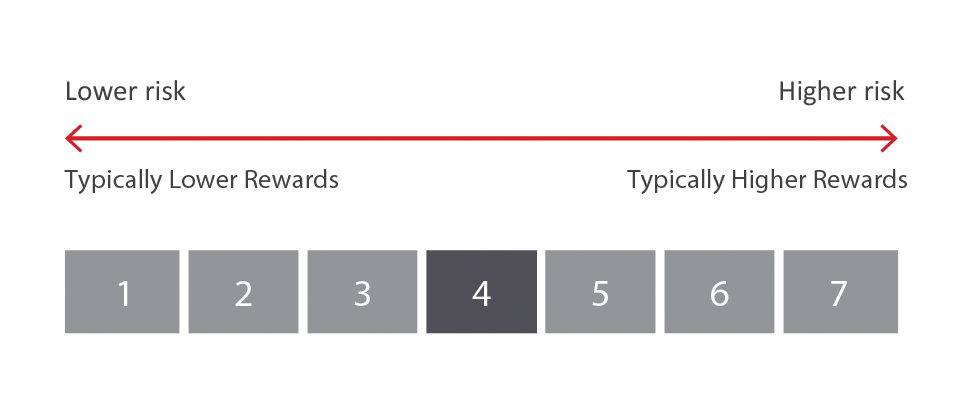
The fund’s KIID Synthetic Risk and Reward Indicator (SRRI) is 4. This is a regulatory measurement that is, where possible, calculated from the volatility of its weekly performance over a five-year period. A score of 4 means the fund’s historic volatility is between 5% and 10%.
The manager took over responsibility for the fund in November 2024. Over the longer term, we expect the reasonably diversified nature of the portfolio, combined with the manager’s focus on risk, to produce a volatility outcome that is in keeping with the asset class. Different share classes could have differing SRRI scores.
John Ryan is Head of Global High Yield at Legal & General Investment Management (LGIM). He works closely with the regional high yield portfolio managers, Brent Finck (US), Peter Duff (emerging markets) and Adil Mirza (opportunistic credit). They benefit from LGIM’s comprehensive and well-resourced Active Fixed Income team, which includes top-down investment strategists, an extensive global network of credit analysts and government bond specialists.
The team seeks to generate attractive risk-adjusted returns through a diversified portfolio of global high yield bonds. In pursuing this objective, the team has a flexible approach, but they are guided by a strong macro structure and a robust valuation framework. They look to generate a level of income that is aligned to their assessment of prevailing market risk.
The fund invests primarily in high yield corporate bonds across the US, Europe and emerging markets that are BB and B rated, with non-sterling exposures hedged back to sterling. The mandate precludes the purchase of financial bonds and companies rated CCC by two ratings agencies, although should a bond be downgraded, it is not an automatic sell. Similarly, bonds that are upgraded to investment grade can be maintained. Duration is usually within one year of the index. The team may invest up to 10% in collective investment schemes.
The investment process incorporates a combination of macro-economic analysis, credit analysis and valuation assessment. The Strategic Asset Allocation process is run by LGIM’s Active Quantitative Solutions team in collaboration with the fund managers. They construct a long-term strategic model portfolio which is designed to provide an efficient anchor point of risk, taking into consideration alpha sources, risk premium, correlation and volatility. The next step is the Tactical Asset Allocation process which is derived from the credit risk appetite scoring process. LGIM’s economists and market strategists seek to balance long-term macroeconomic themes with short-term cyclical considerations. Credit market scoring meetings take place once a month during ‘Strategy Week’. Here, they formalise their risk appetite through a scoring system, using long-term and short-term scores (scaled from -3 to +3). In practice, this represents their expectations for excess credit returns over a longer-term horizon (6-12 months) and a shorter-term horizon (1-3 months) across the different sub-asset classes.
The conclusions from the scorecard provide a framework for portfolio construction, particularly in respect of how and where the managers express risk in the fund. They work closely with the high yield credit analysts who filter the investment universe and look for securities that are consistent with the team's top-down views. They emphasise valuation and assess the probability of default of each security of potential interest. Analysts forecast the issuer's credit metrics and establish a range of outcomes (upside and downside) around their base case assumptions. In constructing the portfolio, they favour a "barbell" approach, creating a defensive core of lower yield, more resilient names alongside higher spread names in which they have conviction.
Formal documentation, including the fund prospectus and the KIID, should be sought directly from the asset manager. For ease of reference, a link to the ASSET MANAGER WEBSITE can be found above.
Investment Association sector definition: Funds which invest at least 80% of their assets in Sterling denominated (or hedged back to Sterling) below BBB minus fixed interest securities.
Read more > Your use of this website is subject to the terms of use set out in the website. By continuing to use our website we will assume that you are happy to receive non-privacy intrusive cookies. Please be aware that if you disable cookies some functionality on the site will not work. Read our cookies policy to find out more about our cookie use and how to disable cookies.
Alternatively, if you are not a financial professional and are seeking financial advice, you may wish to visit unbiased.co.uk to search for a financial adviser.