

A UK smaller companies fund whereby the managers use a well-established and distinctive process to identify businesses that have durable competitive advantages. The 'Economic Advantage' approach focuses upon intangible strengths that are difficult to replicate and support structural growth. Within its sector, the fund features in our 'Smaller-Cap, Growth' category.
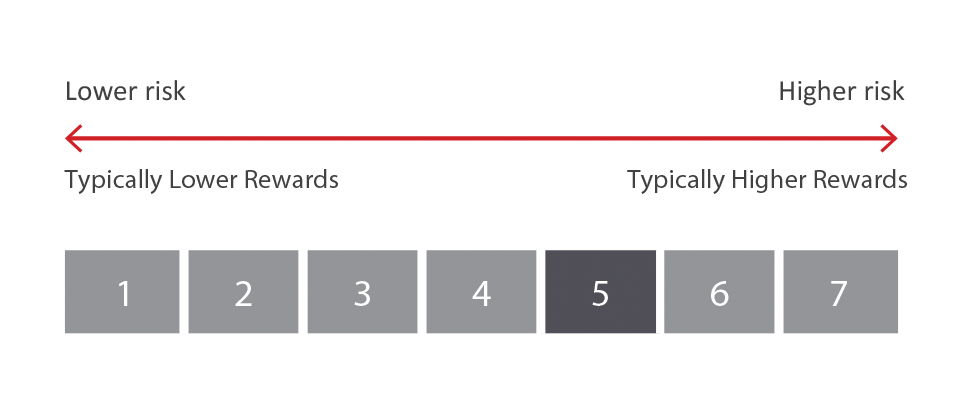
The fund’s KIID Synthetic Risk and Reward Indicator (SRRI) is 5. This is a regulatory measurement that is, where possible, calculated from the volatility of its weekly performance over a five-year period. A score of 5 means the fund’s historic volatility is between 10% to 15%.
SRRI scores of 5 and 6 are common in this sector. The fund’s five-year standard deviation is lower than mainstream UK small-cap equity indices and broadly in line with the peer group average. This is a function of a distinctive process where the focus is on firms with strong positions within their industries. However, it is important to remember that the portfolio may display idiosyncratic behaviour and that a lower volatility outcome is not necessarily a permanent characteristic. Different share classes could have differing SRRI scores.
The Economic Advantage Team is led by Anthony Cross. Mr Cross joined Liontrust from Schroders in 1997 to develop the team’s UK equity investment process and launched this fund the following year. He works alongside co-managers, Victoria Stevens, Matthew Tonge, Natalie Bell and Alex Game. Ms Stevens and Mr Tonge joined the team in 2015, Ms Bell joined in 2022 and Mr Game joined in 2024.
The managers believe that it is possible to identify a small number of companies that are able to resist the natural forces of competition to maintain high profitability for longer than the market assumes. Their "Economic Advantage" process is built around the identification of key factors that consistently drive sustained profitability and the companies that meet these characteristics.
The managers believe that management ownership of companies is important to ensure an alignment of interests and encourage a conservative approach. All holdings must be at least 3% owned by main board directors. In determining positions sizes, they use a company-specific risk grading, which covers both financial risk and industry risk. The liquidity challenges inherent to small-cap investing are mitigated by the low turnover approach and the long-term investment horizon. A restriction on sector deviations from the benchmark, with a maximum overweight or underweight of 50% of the index weighting, is designed to ensure a reasonably balanced portfolio.
The managers invest only in companies with intangible strengths that are difficult for competitors to reproduce. These are considered across three main categories, which are often mutually reinforcing. 'Intellectual Property' assets are often protected by law and encompass patents, copyrights, resource extraction rights and trade secrets. 'Strong Distribution Networks' that are owned by companies give them the ability to provide strong local service and to send and target clients with particular products or information. They can be physical or electronic. 'Recurring Revenues' are often related to product strength or customer brand and the managers like these companies' ability to plan and invest for long-term growth as a result of the earnings predictability created when recurring business accounts for at least 70% of turnover.
Company screening, analysis and scoring is based around the requirement for them to fit at least one of these categories. The managers assess the degree to which companies' advantages are already understood by the market, investing in those that are underestimated or recovering and expected to benefit from earnings upgrades or a multiple re-rating. For recovery areas, cyclically adjusted P/E ratios are considered for companies that are seen to be able to survive economic weakness.
Formal documentation, including the fund prospectus and the KIID, should be sought directly from the asset manager. For ease of reference, a link to the ASSET MANAGER WEBSITE can be found above.
Investment Association sector definition: Funds which invest at least 80% of their assets in UK equities of companies which form the bottom 10% by market capitalisation.
Read more > Your use of this website is subject to the terms of use set out in the website. By continuing to use our website we will assume that you are happy to receive non-privacy intrusive cookies. Please be aware that if you disable cookies some functionality on the site will not work. Read our cookies policy to find out more about our cookie use and how to disable cookies.
Alternatively, if you are not a financial professional and are seeking financial advice, you may wish to visit unbiased.co.uk to search for a financial adviser.