

The search for dividend growth through the cycle, rather than simply a high starting yield, is at the heart of the approach to managing this global equity fund. The manager also runs the fund with an innate sense of value and is willing to take strong positions in stocks when he sees a valuation opportunity. Within its sector, the fund features in our 'Larger-Cap, Income and Growth' category.
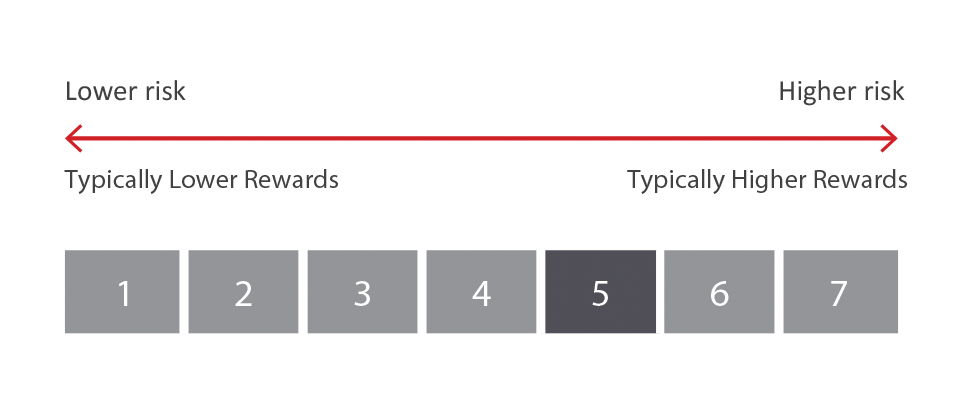
The fund’s KIID Synthetic Risk and Reward Indicator (SRRI) is 5. This is a regulatory measurement that is, where possible, calculated from the volatility of its weekly performance over a five-year period. A score of 5 means the fund’s historic volatility is between 10% and 15%.
Our analysis indicates that the fund’s five-year standard deviation is broadly in keeping with global equity benchmarks. The fund is distinguished from many dividend-focused strategies because of the manager’s drive to locate dividend growth and also his willingness to embrace value-driven opportunities. Relative risk and return variability should therefore be expected. Different share classes could have different SRRI scores.
Stuart Rhodes is the lead fund manager and Head of the Income team within M&G’s equities division. He works closely with deputy fund managers, John Weavers and Kathryn Leonard. Mr Weavers has managed the M&G North American Dividend fund since April 2015 and was appointed deputy manager on the Global Dividend fund in January 2016. Ms Leonard joined M&G in 2020 and was appointed co-deputy fund manager on the fund in June 2024.
The manager believes that consistent dividend growth, rather than necessarily a high starting yield, can generate long-term outperformance. Therefore, his bottom-up process is designed to identify companies with strong capital discipline and the ability to increase dividends consistently.
The fund is relatively concentrated, usually comprising around 50 holdings with the aim of ensuring healthy competition for capital. The manager typically avoids companies where their dividend accounts for more than 75% of cashflow. Although high quality, often more defensive stocks form the core of the portfolio, there is flexibility to invest up to half of assets in more cyclical or higher-growth companies. This is designed to ensure the manager can respond to changing opportunities within a diversified portfolio.
The stock research process is constructed to reflect the manager's belief in the potential performance from companies with a return on capital in excess of their cost of capital and committed to the discipline of paying and growing a dividend. Therefore, an initial screen is undertaken to highlight liquid, dividend-paying companies. The manager then applies more detailed research to identify those companies with a long-term dividend growth track record, seen as a reflection of a company's capital discipline, and long-term growth prospects. An external system, HOLT, is used in the latter analysis to help compare a company's cashflow return on investment with its cost of capital and understand the degree to which the manager's expectations are already reflected in share prices.
This approach typically highlights around 200 stocks that might be suitable holdings for the fund. The manager acknowledges that these are usually high quality companies and their inclusion is dependent on his assessment of their relative valuation. He considers stocks across three categories: quality stocks form the core of the portfolio and are typically characterised by reliable growth and high dividends; asset-backed cyclical companies are more sensitive to the economic cycle but are typically able to sustain their returns through the strength of their assets; rapid growth companies are dividend payers where the manager believes he has identified a pace of growth that the market has underestimated.
Formal documentation, including the fund prospectus and the KIID, should be sought directly from the asset manager. For ease of reference, a link to the ASSET MANAGER WEBSITE can be found above.
Investment Association sector definition: Funds which invest at least 80% of their assets globally in equities. Funds must be diversified by geographic region and intend to achieve a historic yield on the distributable income in excess of 100% of the MSCI World Index yield at the fund’s year end on a 3 year rolling basis and 90% on an annual basis.
Read more > Your use of this website is subject to the terms of use set out in the website. By continuing to use our website we will assume that you are happy to receive non-privacy intrusive cookies. Please be aware that if you disable cookies some functionality on the site will not work. Read our cookies policy to find out more about our cookie use and how to disable cookies.
Alternatively, if you are not a financial professional and are seeking financial advice, you may wish to visit unbiased.co.uk to search for a financial adviser.