

A best ideas Asia Pacific ex Japan equity fund where the manager has a focus upon earnings, sustainable returns and solid valuation support. The approach is flexible and benefits from the experience of the team, together with the breadth of the research resource. Within its sector, the fund features in our 'Larger-Cap, Blend' category.
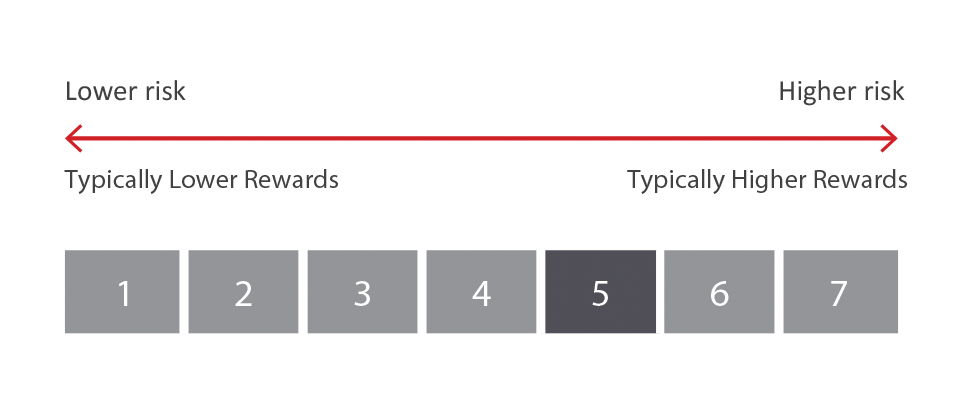
The fund’s KIID Synthetic Risk and Reward Indicator (SRRI) is 5. This is a regulatory measurement that is, where possible, calculated from the volatility of its weekly performance over a five-year period. A score of 5 means the fund’s historic volatility is between 10% and 15%.
SRRI scores of 5 and 6 are most common within this sector. With a score of 5, the fund’s volatility is close to the outer boundary of this SRRI cohort but broadly in line with the benchmark. While the manager is willing to tolerate short-term drawdowns when he sees value emerging, we would not expect the fund’s risk outcome to stray too far from the average over time. Different share classes could have differing SRRI scores.
The fund is managed by Abbas Barkhordar. Mr Barkhorder joined Schroders in 2007, joining the Asian Equities team in 2020. He was appointed co-manager on the fund in 2021, alongside Richard Sennitt, who stepped back from the day-to-day management of the fund in 2026 to become the alternate manager. Messrs Barkhordar and Sennitt report to Robin Parbrook, an extremely experienced Asian equity practitioner.
The manager believes that the Asian regional markets are highly inefficient and that an intensive proprietary research process can provide a significant information advantage. He also believes that the momentum in stocks that typifies the Asian markets can also be exploited if correctly understood.
The portfolio typically features between 50-70 holdings, all of which are expected to contribute to the overall return. Individual holdings are a function of conviction, but there is a limit of 5% overweight versus the index. The portfolio turnover is always a function of opportunity. The active share is constantly above 80% and the portfolio tends to be ‘anti-momentum’ by the nature of its construction. Cash is not used as a tactical investment tool and is generally kept below 5%.
The process is very research-intensive, with the manager relying upon the in-house research capability of Schroders, as well as his extensive network of contacts and sell-side research. The focus is firmly upon companies with visible earnings, sustainable returns and solid valuation support. The research is driven by an extensive programme of company meetings, which focus upon the future management strategy, the competitive position of the company, barriers to entry and how shareholder wealth will be created. The analysts use standardised models to generate cashflow and earnings estimates to evaluate the company’s ability to meet strategic goals.
Stocks are ranked from 1-4, with 1 a strong buy. Stock grades and other analyst output are stored in the firm’s in-house global research portal Nexus, a modularised platform, which allows integration and interconnection of many investor-focused applications. The manager typically source ideas from stocks ranked 1 and 2. He is, however, always aware of the degree of momentum in Asian markets and weaker ranked stocks may also be considered where value is perceived. The manager also utilises his extensive network of contacts, alongside selective use of sell-side research, to identify interesting investment ideas.
While the investment view is bottom-up in essence, country allocation is considered within a top-down overlay. This view is formed with help from Schroders’ central economics team, a proprietary country allocation model and his own perspectives on politics, demographics and long-term growth. As part of the buy and sell discipline, he considers analysts’ stock rankings and price targets.
Formal documentation, including the fund prospectus and the KIID, should be sought directly from the asset manager. For ease of reference, a link to the ASSET MANAGER WEBSITE can be found above.
Investment Association sector definition: Funds which invest at least 80% of their assets in Asia Pacific equities and exclude Japanese securities.
Specific sector note:
Up to 5% (but no more than 5%) of the total assets of the fund can be invested in Japanese equities to allow flexibility for corporate actions, for example.
Your use of this website is subject to the terms of use set out in the website. By continuing to use our website we will assume that you are happy to receive non-privacy intrusive cookies. Please be aware that if you disable cookies some functionality on the site will not work. Read our cookies policy to find out more about our cookie use and how to disable cookies.
Alternatively, if you are not a financial professional and are seeking financial advice, you may wish to visit unbiased.co.uk to search for a financial adviser.