

A European equity fund managed according to a disciplined value approach. The team looks for companies that have suffered a significant operational and/or share price setback but have the potential to recover over the long term. Within its sector, the fund features in our 'All-Cap, Value' category.
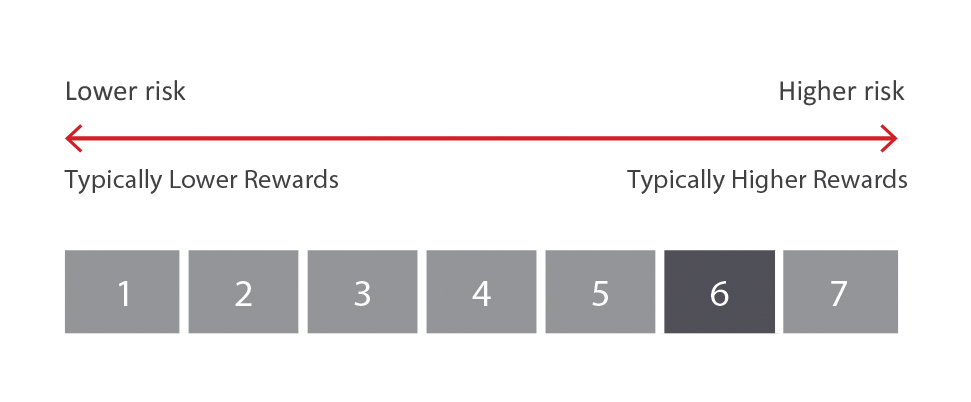
The fund’s KIID Synthetic Risk and Reward Indicator (SRRI) is 6. This is a regulatory measurement that is, where possible, calculated from the volatility of its weekly performance over a five-year period. A score of 6 means the fund’s historic volatility is between 15% and 25%.
The fund’s risk characteristics are illustrative of its differentiated nature and the requirement for investors to be prepared for periods of shorter-term struggles, as well as bursts of strong returns. Its five-year realised standard deviation is above that of European equity benchmarks and its maximum drawdown has also been larger. We believe these characteristics are a fair reflection of the profile that investors should expect. Different share classes could have different SRRI scores.
The fund is managed by Andrew Lyddon, an established member of Schroders’ Global Value team. The Global Value team is headed by Simon Adler, and it incorporates several fund managers who run value and income-orientated portfolios across UK, European, global and emerging markets. They benefit from Schroders’ extensive resources.
Contrary to prevailing wisdom, the team believes that stock markets are inefficient because market participants do not always behave in a rational way, and often extrapolate short-term trends, both good and bad. Furthermore, they believe that investors often underestimate the potential for mean reversion in earnings. Therefore, the focus of their approach is the identification of mis-priced securities where they see the potential for a recovery in profits, however challenging the backdrop may appear.
Fund positioning is not constrained by the benchmark. The portfolio typically comprises between 30 and 70 stocks, with no more than 10% in any one stock or 35% in any one sector. There is a maximum limit of 50% in any one country and the fund is permitted to hold up to 10% in cash.
The approach is framed by the identification of stocks that are appear cheap and, through additional research, the analysis of the degree to which they are trading substantially below their long-term value. This is an innately contrarian style and leads the team towards companies that have endured significant operational and/or industry headwinds and consequently, are often unloved and out-of-favour. The process starts with several quantitative screens designed to identify potential candidates. Price relative to 10-year average earnings is a key screen, but they also look at other metrics including enterprise value, net operating profit after tax and price/tangible assets. The screens narrow the investable universe into a subset of undervalued companies that are candidates for proprietary research by the team. They then construct a financial model for each company. This is based on at least 10 years’ worth of company accounts to help understand how a firm has performed through a full economic cycle. Their analysis of these companies focuses upon the nature of their business models, balance sheets and capital allocation decisions. The balance sheet analysis is designed to ensure the business can survive further adversity, while the business model assessment helps the managers judge the factors that will drive a turnaround and understand the potential extent of any such improvement in profitability. The team can then complete the “7 Red Questions” checklist. This is designed to uncover value traps and address key investment risks in a disciplined and repeatable way. The information and analysis gleaned from each of the questions feeds into the overall assessment of whether the risk/reward trade-off is attractive for a given company.
Formal documentation, including the fund prospectus and the KIID, should be sought directly from the asset manager. For ease of reference, a link to the ASSET MANAGER WEBSITE can be found above.
Investment Association sector definition: Funds which invest at least 80% of their assets in European equities and exclude UK securities.
Read more > Your use of this website is subject to the terms of use set out in the website. By continuing to use our website we will assume that you are happy to receive non-privacy intrusive cookies. Please be aware that if you disable cookies some functionality on the site will not work. Read our cookies policy to find out more about our cookie use and how to disable cookies.
Alternatively, if you are not a financial professional and are seeking financial advice, you may wish to visit unbiased.co.uk to search for a financial adviser.