

A flexible bond fund whereby the manager seeks to generate income without putting capital at undue risk. The approach is bottom-up, built around a proprietary credit rating process. The manager seeks opportunities in lower-rated bonds, particularly those in the BB to B rated area. Within its sector, the fund features in our 'Total Return' category.
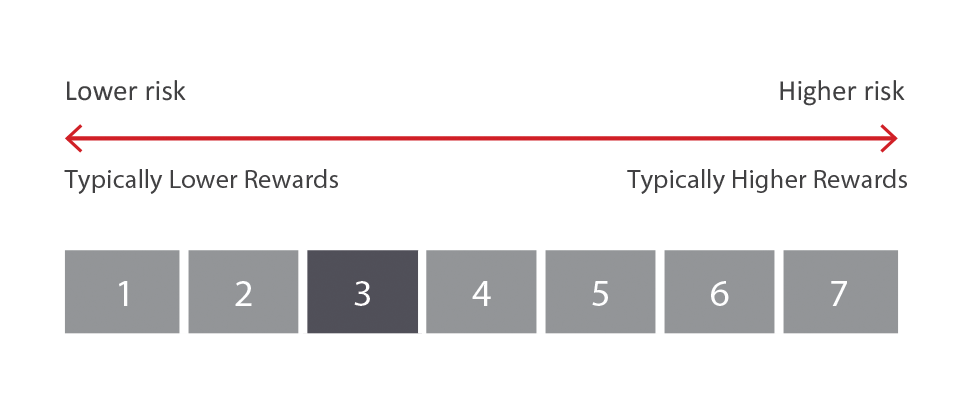
The fund’s KIID Synthetic Risk and Reward Indicator (SRRI) is 3. This is a regulatory measurement that is, where possible, calculated from the volatility of its weekly performance over a five-year period. A score of 3 means the fund’s historic volatility is between 2% and 5%.
The fund’s five-year standard deviation is slightly lower than some peers. This score is in keeping with its conservative credit mandate. Drawdowns tend to be shallower than would ordinarily be expected of a higher yielding fund. Absolute volatility is also relatively low. Different share classes could have differing SRRI scores.
Peter Harvey has managed the fund since its launch in 2006 and joined Schroders as part of the acquisition of Cazenove Capital in 2013. He is a member of the firm’s extensive European credit team, which comprises portfolio managers and analysts.
The fund is managed with an absolute return mentality, whereby the manager seeks attractive total returns through successful credit selection. With this in mind, he believes that significant opportunities are created because of inefficiencies in the way that investors process company information. In particular, bonds whose ratings are close to the boundary between investment grade and high yield are rich with ideas. In practice, the manager expects his flexible approach to credit selection to produce a return of 2-3% in excess of 3-month LIBOR over the medium to long term.
The fund is managed without reference to a benchmark. Gilt futures are used to hedge out much of the fund’s duration risk; aggregate duration is typically 1-2 years and a maximum of 4. In order to facilitate the mandate’s flexibility, derivatives are used for both investment purposes and efficient portfolio management, which means fund may use leverage and take short positions. Non-sterling exposure is largely hedged back to sterling. Risk management is embedded throughout the process, from diversification of themes, in-depth proprietary credit research and portfolio construction to pre- and post-trade portfolio risk monitoring systems.
This fund is run according to the manager’s long-established, bottom-up approach, built around a proprietary credit rating process. The manager places particular emphasis on bonds whose ratings are close to the boundary between investment grade and high yield (“cross-over” credits), where he believes he can discern an information advantage. The process also incorporates credit themes, which are used to create the top-down framework that helps to guide security selection.
Credit portfolio managers hold weekly meetings to identify forward-looking themes in the context of current market conditions (for example, consumer trends, technology developments, environmental factors). These are then communicated to the credit analysts, who incorporate them into their analysis, searching for names that either stand to benefit from the themes, or are at risk of deteriorating. The team also undertakes a monthly credit strategy meeting to identity cross-market relative value opportunities and highlight risks to the market over the short to medium term. At the issuer level, the manager works closely with the credit analysts to understand a company’s business risk, financial metrics and management team, a process which usually involves meeting a company’s senior management.
Formal documentation, including the fund prospectus and the KIID, should be sought directly from the asset manager. For ease of reference, a link to the ASSET MANAGER WEBSITE can be found above.
Investment Association sector definition: Funds which invest at least 80% of their assets in Sterling denominated (or hedged back to Sterling) fixed interest securities.
Read more > Your use of this website is subject to the terms of use set out in the website. By continuing to use our website we will assume that you are happy to receive non-privacy intrusive cookies. Please be aware that if you disable cookies some functionality on the site will not work. Read our cookies policy to find out more about our cookie use and how to disable cookies.
Alternatively, if you are not a financial professional and are seeking financial advice, you may wish to visit unbiased.co.uk to search for a financial adviser.