

A global equity income fund which is managed with a strict yield discipline. The team looks for high quality, durable businesses which are out-of favour or misunderstood. This approach guides them to premium yielding companies, which is a key feature of the fund. Within its sector, the fund features in our ‘Larger-Cap, Dividend Sustainability’ category.
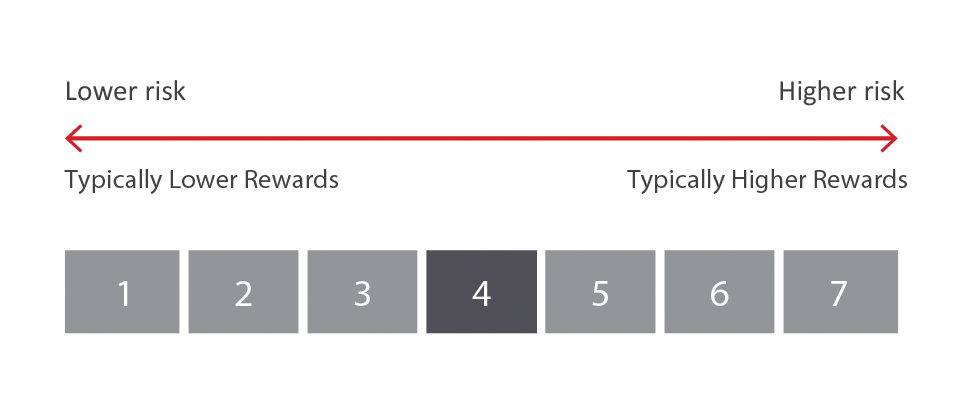
The fund’s KIID Synthetic Risk and Reward Indicator (SRRI) is 4. This is a regulatory measurement that is, where possible, calculated from the volatility of its weekly performance over a five-year period. A score of 4 means the fund’s historic volatility is between 5% and 10%.
The observed five-year standard deviation of the fund is notably lower than that of mainstream global equity indices. In addition, its maximum drawdown is also lower than that of other funds. This is in keeping with a process that is highly valuation conscious and backed by a strict yield discipline. Different share classes could have different SRRI scores.
The Global Income Equity Strategy is headed by Nick Clay, who joined the firm in 2020 alongside Andrew MacKirdy (portfolio manager), Robert Canepa-Anson and Colin Rutter. Previously, they worked together at Newton Investment Management, a subsidiary of BNY Mellon, where they ran global income funds according to the same approach. Katherine Velasquez Rodriguez joined the team as an analyst in 2024.
The core aim is to own quality, durable businesses that compound a premium dividend yield to the market and have been purchased with a valuation margin of safety. To do this, the strategy is based on the philosophy that investing is inherently probabilistic in nature. With this in mind, they believe that a focus on sustainable dividends leans the probabilities of investing to the advantage of its clients.
The portfolio usually comprises 40-60 stocks. Troubled compounding machines and ex-growth cash generators, where returns on invested capital are higher and more consistent, are expected to make up at least two-thirds of the portfolio. There is lower representation from the other buckets of controversy because of greater uncertainty underpinning their assumptions. Liquidity analysis is also a key part of the construction process. A compelling idea is typically weighted at 3-5% and others are introduced at 1-3%. Turnover is typically low at around 20% per annum.
The team seeks opportunities with three requisite features: a premium yield, dividend sustainability and a valuation margin of safety. They argue that these are relatively easy to find individually but, in combination, they are rare and typically occur when an element of controversy is also present. To find these controversies, they look for multiple types of ideas. These are categorised as: ‘troubled compounding machines’, where temporary problems have been mistaken for permanent issues; ‘ex-growth cash generators’, where the market believes the business is structurally broken; ‘profitability transformation’, where there are fears over a company’s exposure to the economic cycle, ‘capital intensity’, where the market has ignored a stock or underestimated its compounding power; and ‘special situations’, such as a spin off or hidden assets. They contend that concentrating on the same buckets of controversies time after time increases the likelihood of understanding the nature of the controversies. This pattern recognition helps to inform the team’s assessment of whether the controversy is temporary, and therefore an investment opportunity, or alternatively, an area to avoid.
From here, the sustainability and valuation of the company’s underlying cash flows are modelled against a range of potential future outcomes. The team builds a series of scenarios, the main thrust of which is to highlight where they could be incorrect in their analysis. Having a detailed understanding of the downside risk also allows the team to assess and compare the margin of safety of an investment and informs position sizing. Buy candidates must have a prospective yield of at least 25% more than the global market index and they are sold when they are forecasted to yield less than the index.
Formal documentation, including the fund prospectus and the KIID, should be sought directly from the asset manager. For ease of reference, a link to the ASSET MANAGER WEBSITE can be found above.
Investment Association sector definition: Funds which invest at least 80% of their assets globally in equities. Funds must be diversified by geographic region and intend to achieve a historic yield on the distributable income in excess of 100% of the MSCI World Index yield at the fund’s year end on a 3 year rolling basis and 90% on an annual basis.
Read more > Your use of this website is subject to the terms of use set out in the website. By continuing to use our website we will assume that you are happy to receive non-privacy intrusive cookies. Please be aware that if you disable cookies some functionality on the site will not work. Read our cookies policy to find out more about our cookie use and how to disable cookies.
Alternatively, if you are not a financial professional and are seeking financial advice, you may wish to visit unbiased.co.uk to search for a financial adviser.